Saturday, January 12, 2013

The Thin Red Line of Dawn


Taking the seat for the night shift is fraught with challenges, the least of which is trying not only to remain awake but alert as well. Coffee helps immensely; it is a drink I couldn't stand until I became a pilot. The official air force policy is to refrain from using electronic devices or any reading material other than technical manuals, but that doesn't cut it at zero dark thirty crossing over the Atlantic, especially with all the modern improvements in communications and air traffic control that leaves pilots with less demanding responsibilities. What is really more important, an awake but entertained pilot or one who is asleep with the flight manual in their lap?

But the night shift can also be quite rewarding, especially as the coming day approaches. The first sign of the new day is a gradual lightening of the horizon where none was before. A subtle gray envelopes the sky even as the world below the horizon exists in a uniform shade of black. The thin line of the horizon becomes more and more pronounced, brightening in fiery shades of red, orange, and magenta stretching across the entire eastern sky. Clouds only magnify the effect, creating an almost surreal portrait that defies the imagination. Then even as the world sleeps in darkness below, the vault of the sky above turns the deepest blue. Pictures simply do not capture the scene appropriately.

Eventually, the sun flashes over the dividing line of bright and dark, destroying the vivid eruption of colors burning the sky. And as sun rises higher, blasting our eyes, we dig out our sunglasses, lower our seats, and cover the windscreen with our aviation charts, whatever it takes to shield our eyes from the blazing glare. There is nothing more to see now; perhaps the relief pilot is awake and I can hit the bunk for a few hours of sleep before landing in Europe.

Monday, February 8, 2010

Until Death Do Us Part


One week ago, the largest military base on the West Coast was created when the BRAC-directed merger of Ft. Lewis army post and McChord Air Force Base took place. While the missions of the installations in Washington State will remain unchanged, the consolidated base, now called Joint Base Lewis-McChord (JBLM), falls under the administrative control of the US Army. Much like an arranged marriage, there will be plenty of growing pains as each side learns more about the other, even though the two branches were once one prior to 1947. But much has changed since the Army Air Corps spread its wings and became the United States Air Force.

JBLM is one of seven new joint installations created by the 2005 BRAC mandate, joining five other joint installations created in 2009. While many of the new super-bases share a common fence line, as JBLM does, others are spread over a wider area, such as Joint Base San Antonio, which combined Lackland and Randolph Air Force Bases with Ft. Sam Houston. Most of the combined installations involve mergers between the Army and Air Force, but naval facilities at Pearl Harbor, Hawaii, and Charleston, South Carolina, were combined with Air Force installations in those locations. Administrative control of joint facilities reverts to the larger branch, which usually means Army or Navy oversight.

Other than gaining an unwieldy new name, such as Joint Base Andrews-Naval Air Facility Washington (formerly Andrews AFB, the home of Air Force One), what does the new joint realignment process actually do? Not much.

Sure, some essential services, such as perimeter security, civil engineering, base housing, and landscaping, will be streamlined, but in many cases, the civilian workforce at joint bases will increase, not decrease, due to an expected increase in services needed by a larger installation. Other base facilities, such as the main exchange and commissary service, will remain unchanged; these functions have combined decades ago as the Army Air Force Exchange Service and Defense Commissary Agency, respectively. At JBLM, the Army assumed command of the Air Force clinic some time ago, but the ultimate goal of closing the clinic and combining medical care at Madigan Army Hospital will never be realized due to a lack of space available and simple logistics. Even as one installation, redundancies at JBLM will continue to exist indefinitely, challenging the BRAC goal of saving money in the long run.

Money is what the joint process is all about. Shrinking defense budgets have forced the entire BRAC direction, even though Congress is not supposed to dictate how the Defense Department spends its allocated funds. That is not their job, but the BRAC completely subverted the traditional process. In any event, defense officials believe that merged operations will save money in the long run; they claim joint bases would need fewer delivery trucks, and contracts could be negotiated at better terms to the government. That reasoning is seriously flawed, since they will actually use the same amount of vehicles, if not more at geographically separate facilities like Joint Base San Antonio. Furthermore, since when has the same government responsible for $600 hammers ever negotiated anything from a position of strength?

Even the government is skeptical of the expected cost savings. Last year the GAO pointed out that the BRAC’s expected $2.3 billion savings over 20 years had already dwindled to $273 million, a difference of 88 percent. Furthermore, the GAO report concluded that the amount will continue to decline in the future, and could result in an actual increase in costs due to higher administrative costs and the loss of efficiencies in the wake of new DOD standards for service levels. Yep, the joint process could actually cost more money than if nothing had been done at all.

Maybe it’s not about the money; many experts believe it will encourage greater joint operations between the branches. Representative Adam Smith (D-Tacoma), the chairman of the House subcommittee on air and land forces, believes that the armed forces will move toward greater jointness despite their historical perspectives. However, the historical differences are what make each branch unique and ideally suited to each respective mission. Blending the branches together ignores their heritage and their skill sets, and could water down their warfighting mission. Sure, Canada has unified armed forces, but they haven’t conducted offensive operations since WWII. If all you need are peacekeeping troops, the Canadians are the world’s best. If you want to win a war, you’d better pass on a nation with unified armed forces.

Don’t get me wrong; jointness in an age of declining defense budgets despite an increase in demands for military power is a great thing. We operate joint bases in Afghanistan, Iraq, and elsewhere, but those facilities are expeditionary camps for the most part. Joint operations were the only way to get the Navy and Marines into the land war in Afghanistan, a landlocked country more than 600 miles from the sea. Yes, their help is imperative to the war there; in fact without them, the early air war over Afghanistan would have much more difficult. But that is more a confirmation of naval air power and the need for the aircraft carrier than it is for joint operations.

The Air Force has much to lose in joint basing arrangements. We have always spent more on quality of life programs and facilities than the other branches. Our airbases and the aircraft based there are the equivalent of the naval fleet and deployed forces that the Navy, Marine Corps, and Army meticulously fund and support. The other branches often defer base maintenance when limited funding is needed for other priorities. Under joint basing arrangements, which typically fall under Army or Navy control, reducing the quality of life and facilities may reduce readiness at bases where the Air Force has lost control. McChord AFB was one of the shining jewels in the Air Force crown; the base is the only home of the Air Mobility Command Rodeo, an international airlift competition that the new Army landlords are lukewarm at best about hosting next year. Other bases, like Hickam AFB in Hawaii, also have a long and distinguished history that will undoubtedly be diminished under Navy control.

In reality, little will change for me, personally, at JBLM. It will almost be transparent. I will continue to fly the C-17 wherever the Air Force needs me to go. My day-to-day life will change little more than seeing base decals on car windshields once again and browner grass and crumbling buildings endemic on army installations nationwide. But it could be worse; at least we don’t have a name like Naval Air Station Joint Reserve Base Fort Worth. Try putting that on a letterhead.

Thursday, February 4, 2010

A Slight Detour

I woke up a few hours ahead of our expected alert for our flight home. It had been a long trip and we were two days late getting home, but the entire crew was eager to depart. After a run along the main drag of the town next to the airbase, I returned to find my crew chief in uniform waiting for a bus to take him to the jet. Apparently, flight line maintenance had found a cracked lens on the rotating beacon under the belly of our jet. I decided to call in before they turned our mole hill of a problem into a mountain.

It was already too late. I was informed that they did not have a new lens. A part would have to be driven from another base, several hours away. I suggested that they remove the light assembly, cover the hole with aviation speed tape, and we’d get a one-time waiver for a daytime flight back to our home station. They had already considered that; however, the hole was too big to cover with speed tape. How about fabricating a sheet metal plate to cover the hole? They had that covered also; their sheet metal shop could not fabricate a plate of the required thickness. We were broke and it looked doubtful that we’d be fixed within our alert window. We’d be looking at least one more day away from home.

Before I could pass the word to my soon to be dejected crew, I received another nugget from the command post. They wanted me to call TACC for a mission change. Um, excuse me? We were going to be three days past our scheduled return date and they had a mission change for us? Not good.

I called the Duty Officer at TACC and was informed of our new mission: they wanted us to rescue a jet broken in Canada. We’d fly in the parts they needed along with a maintenance crew to make the repairs. I mentioned that we were broken as well; perhaps there was another C-17 on the East Coast that wasn’t broken that could fly the mission. After all, there are three C-17 bases on the eastern seaboard. How could we be the only one available?

But it had already been decided that we were their crew, regardless of logic. The same maintenance team that was driving the part to us would fix our jet and then fly with us to Canada to fix the other jet. I also discovered that TACC thought the other broken jet was in Quebec, but the 4-digit ICAO code was for a Canadian airfield in British Columbia. A simple error had caused TACC to reach out to what they thought was the closest aircraft to fly the mission. I pointed out that a jet already on the West Coast could have the stuck aircraft fixed much sooner; hell, even a pair of commercial airline tickets would have the maintenance team in Canada faster than we could, and for far less money. Our jet costs $3,000 plus per hour to fly; putting a couple of maintenance guys on a commercial flight would run around $600 per person. But TACC wasn’t interested in alternative solutions. They already had a solution - us.

And there was one last parting gift; the other jet was a higher priority mission with plenty of attention from the star level – meaning some general officer somewhere was quite interested in moving the cargo and troops stuck with the jet. So there was a chance that when we landed in Canada, the other crew would move the cargo to our jet and continue their mission, leaving us stuck with their broken aircraft. We’d be overdue three or more days, stuck perhaps a four-hour drive from our home base.

As you can guess, these latest developments didn’t go over well with my crew, especially the ones who had wanted to fly past our legal duty day the night prior. I called our squadron back home to let them know what had occurred and asked if my co-pilot could be allowed to buy an airline ticket home to save his vacation. However, he felt that we would still make it back home in time, even with the Canadian detour, as long as we didn’t lose our aircraft when we landed. But even in a worst case scenario, he would be able to catch a flight from Canada to make it home in time.

So we got another night in a small town on the East Coast. The next day, our aircraft was fixed and we were off for Canada. Checking our dispatch paperwork, we were scheduled to continue with our aircraft to our home base. Unless we were told otherwise, I planned to fly the mission as scheduled. I sure wasn’t going to stick around once we landed to see if something changed.

We descended into quite a storm on Canada’s West Coast. Gusty winds and driving rain greeted us as we emerged from the overcast clouds and foamy whitecaps furiously rippled across the Strait of Georgia beneath us. The weather radar was painting some seriously dangerous storm cells scattered around us – shades of red and magenta on the screen reflected areas we took extra caution to avoid. It was easy enough to find the airfield and we maneuvered for a visual approach. The winds were blowing plenty of seagulls over the airfield; if we were unlucky enough to hit one, we’d be stuck in soggy British Columbia as well. Fortunately, we landed uneventfully and taxied to the military ramp.

We deplaned the maintenance team with our engines still running and called for our outbound clearance, which we had conveniently filed en route to Canada. I had already checked NOTAMS and the weather, so there was nothing else to be done. I didn’t want to give anybody the opportunity to trump us and take our jet. So as soon as the tower read us our clearance, we taxied out and took the runway. Soon we were hurtling down the rain-slicked runway, gulls practically whizzing past us, and eagerly leapt into the saturated sky.

Mission accomplished. We were going home.

Tuesday, February 2, 2010

Get Home-itis

Between our delayed dispatch paperwork and the last-minute aircraft deicing in Canada, we lost a little over two hours of our day – two hours that we didn’t have. As soon as we took off for the warmer climes of the Carolinas, I started figuring out exactly how much time we’d have left in our duty day. We’d land with just over six hours remaining, but by the time we’d refuel and get our flight plan in the system, there would be no way we’d be able to fly the next leg home. We were looking at a 25-hour day to do so, one more than allowed by our regulations.

Three members of the crew were eager to continue our day to make it home. Since we had previously requested a duty day waiver earlier in the trip, they were hoping that I’d request another waiver so that we could make it home. But it didn’t pass the common sense test: fly all night, a 25-hour duty day, nobody had slept all day, we would have an empty aircraft, and we’d arrive back at home station around six am the next day. It had all the markings of a classical malady well-known to the flying community: Get Home-itis.

Get Home-itis is a syndrome in which crewmembers place the desire to return home after a prolonged absence over more pressing factors, such as fatigue, that could contribute to a flight mishap or accident. Poor judgment is often the first symptom, although irritability, channelized focus (aka one-track mind), and inattention to detail can also result. While it cannot be found in any medical journal or dictionary, Get Home-itis is a very real malady that that has caused mishaps, taken lives, and damaged aircraft.

And three of the five people on my crew had it – bad.

While still en route to our second destination, I had already determined that we couldn’t continue our day. I contacted our command and control agency to let them know, then called the base to ensure we’d have rooms for the night. All but one of the crew gradually accepted the fact that we’d be away from home one more day, after I explained the big picture. Eventually the lone holdout’s story came out and I understood his hesitancy to spend the night at our destination.

It turned out that a few months earlier, he had spent the night at a local hotel just off base. He was understandably disappointed when he discovered that his room had not been cleaned. The piece de resistance of his dismal evening had been when he pulled his sheets back to discover – ahem – something usually flushed after a night of sexual relations. To add insult to injury, when he complained to the base lodging office that had sent his crew to that hotel, they didn’t believe him.

At least lightning doesn’t usually strike twice. There was little chance he’d have a repeat experience, especially since we would be staying at a different place, a newer chain hotel well known for its hospitality. I know it was little recompense for somebody anxious to go home after a longer than usual trip. I’d probably be the poster child for Get Home-itis myself if I had plane tickets to Hawaii a few days later.

I thought everything would work out in the end. We’d have a decent alert the next afternoon and we’d be home at a decent hour. But I was wrong. I was going to pay for playing by the rules.

Thursday, January 7, 2010

Garden State

November was a busy month in the squadron and I soon found myself back on the road on another trip. With a new crew and a new jet, I was soon flying across the country eastbound. It was night when we arrived at an airbase in the Garden State and my co-pilot was flying the aircraft as we were vectored for the ILS approach. My co-pilot’s approach and landing were uneventful, and we taxied to the ramp. We were scheduled for an overnight stay before we’d fly out for Germany the next day.

After engine shutdown, one of my crew discovered that we had struck several small birds during our arrival. Two bird strikes were visible on the fuselage, but a third bird impacted our number two engine nacelle and possibly had been ingested by the engine. Maintenance would have to inspect the engine carefully to determine if any internal damage was noted, but they’d have plenty of time to do so while we were in crew rest. We soon found ourselves at a hotel off-base, at the edge of a small town. It was late, so little was open besides a convenience store and a Domino’s Pizza place, so most of us wasted no time in getting some sleep.

The next day, I called to check on our aircraft. Maintenance had found no damage with the engine, but changes in our mission now required us to slip our departure by two days. With 48 hours off in New Jersey, we began planning what to do with our newfound freedom. New York City was within reach to the north, but Philadelphia was closer. I started calling around, looking for some wheels. None of the local rental car outlets had any available cars, and none of the crew possessed a government drivers’ license required to check out a government vehicle. Taxi service to Philly was outrageously expensive and we were too far from the closest rail station as well. We were stuck in a flyspeck town in the Garden State with no means to go anywhere. As if to add misery to our pain, the area experienced a power outage, plunging the hotel and all nearby businesses into darkness. We had to get away.

A few of us splurged for a cab to the closet sports bar to watch Monday Night Football, an adventure that set us back $60 round trip to a nearby town just off the Interstate. It was nice to get away, at least for a night, but the excessive cab fares kept us closer to our hotel for the rest of our stay. At least there was a great Italian restaurant a few blocks from our hotel and a package store across the street, so it wasn’t too bad. But we were more than ready to leave at the end of our stay. Our dreams of touring the eastern seaboard had been crushed, so we were ready to reach Germany and make our way downrange for the remainder of our mission.

The dawn of our last day in Jersey revealed a soggy mess; low sullen clouds and a grim veil of mist painted the landscape a morose shade of gray, a scene reminiscent of fall back home in the Pacific Northwest. Our alert came late that afternoon, springing us from our 1970s era hotel. The weather wasn’t looking great on the other side of the pond either, but we were determined not to spend another night in Jersey. We added a little extra fuel for a potential divert and prepared to depart.

We had one last hurdle to overcome. Our takeoff was scheduled for sunset, at the peak of the local bird activity period. Birds generally flock within an hour of sunrise or sunset, so we had to obtain special permission to takeoff during this period. We sat in our seats, ready to start engines, while the command post contacted the appropriate waiver authority to allow us to depart. I couldn’t imagine going back to our dismal rooms for another night of monotony.

Fortunately, we eventually gained approval to depart. We started up, taxied out, and lined up on the runway. Our stay in the Garden State was soon behind us.

Wednesday, December 30, 2009

A Fine Mess

After sitting a few days in Germany after our Purgatory in the Sandbox, we recuperated quite well. German cuisine and beer can do that for you. As can sleeping in a real bed again.

However, we were all eager to go home. We were a few days late when we were finally alerted for a westbound sortie. But it was disappointing when our crew bus pulled up to our aircraft and we unloaded our bags to find the filthiest jet we had ever seen. Dirt was caked on the pallets and a fine sheen of dust settled over everything in the aircraft – even the cockpit. It was unacceptable. Knowing that US Customs would never allow the aircraft to pass inspection, our loadmaster passed our concerns to maintenance. The aircraft and cargo needed to be cleaned.

Maintenance deferred to the aerial port, the organization responsible for loading and unloading cargo. The aerial port personnel were quick to point out that the cargo had been loaded downrange – in the Sandbox – so they weren’t responsible. True, it was loaded downrange, but it still had to be cleaned. We could not transport dirty cargo in a dirty aircraft back to the States. We repeated our concerns that the aircraft and cargo needed to be cleaned. Or downloaded. But the aircraft would still have to be cleaned even if the cargo was taken off.

The aerial port supervisor – a civilian ironically named Mr. No (not sure how he spelled it, but that was actually his name) – refused to comply. His people would not clean the aircraft and cargo, nor would they offload the cargo. We were now in a pissing match with Mr. No, who promptly called our local command and control organization, the Air Mobility Command Center (AMCC). Instead of backing us, the AMCC tried to get us to take the cargo as is. They’re supposed to know our rules and regulations as well as we do, yet the AMCC sided with Mr. No. We stood our ground.

The AMCC bumped the problem up the chain of command – to Air Mobility Command’s Tanker Airlift Command Center (TACC) near St. Louis. A full colonel there tried to assure us that Customs would clear the aircraft. But we were far from assured that he could vouch for Customs. When the rubber hit the road, it would be the aircraft commander facing a $10,000 fine and I’m pretty sure that Finance would not reimburse a Customs fine on a travel voucher. We stood our ground.

The aerial port found a local US Customs representative and asked him to come out to “pre-inspect” our cargo, basically to ask him if the cargo would be cleared if he was the inspector stateside. He took one look at the mess and shook his head. We had our first ally in our struggle.

Hours passed. Nothing was being done. We figured out that the AMCC was letting us “burn” until we reached the end of our duty day, four hours after our scheduled takeoff, at which time we’d go back to crew rest and they’d simply alert another crew on the same jet. This was technically against the rules, but so was allowing a filthy jet to head back to the States. The AMCC would probably find a young active duty crew eager to get home, who either wouldn’t know about the regulations concerning a dirty jet or could be coerced into bending the rule. Full colonels have a way of convincing junior captains into doing whatever they want.

Mr. No grew impatient. He should have waited for our four-hour rule. But he called out the big gun – the aerial port’s operations officer, a major who came out to the jet armed with the latest regulations in his hand in an attempt to get us moving. It was Mr. No’s downfall. The major had brought us the written guidance backing our position: dirty cargo could not be transported back to the States. The cargo had to be cleaned.

Within 10 minutes, we had every available airman in maintenance and in the aerial port sweeping and vacuuming the jet. There was too much grime and dirt for a thorough cleaning, but they made a definite improvement. Once we felt it was within acceptable limits, we accepted the jet for flight. It was an extremely late takeoff, but we were finally heading home.

After landing on the East Coast to download the cargo and refuel the jet for the remainder of our journey to the Pacific Northwest, Customs officials met our jet as expected. They came aboard, poked around the usual places, and checked our paperwork. It was obvious that something was bothering them.

“Kind of a messy jet, isn’t it?” one of them asked. “It’s a good thing I’m in a good mood tonight; I’ll clear you this time. Merry Christmas!”

And it was only October.

Monday, December 28, 2009

Groundhog Day


Three days after arriving at the American airbase, we were still there, waiting for parole. It seemed tantalizingly close, yet as the seconds turned into minutes and the minutes turned into hours, we still were not alerted to fly. There we sat on Bravo alert, in our cramped tent, waiting for the pager to tell us to go to work. And the damned thing never went off.

Before we had been set up on Bravo, we had relatively more freedom. We had one day to enjoy our allotment of three beers, make a morale call home, watch the Sunday football games on a wooden screen at The Bra, and basically have the run of the base. It was initially pleasant to be set up for our Bravo with an expected alert time, which meant that we would eventually be allowed to leave. But as the time passed after our expected alert time, we learned that they were trying to fix our jet; the yaw damper was out and they gave us an estimate time to repair it.

That time came and went as well, as did all of the subsequent times they gave us. A Bravo alert can run up to 48 hours before we must be released or alerted, so our waiting turned into a kind of Groundhog Day. I’d sleep whenever I was tired, I’d sneak out for a bite to eat when hungry, even ventured out for a quick run in my civilian athletic clothes. I lost myself in reading, watched a movie or two on my laptop, and sneaked out to call home and grab a coffee. We were supposed to remain by the pager so that if we were alerted, we would be immediately ready to go to work. Yet at any given time, the five of us on the crew were scattered to all four corners of the base; it would have taken some time just to get the whole crew back together.

Most of the time, I was good and stayed in our tent. Depending on the sleep schedule of one or the other of us, the lights would either be full on or all off. The only constant was the monotonous hum of our air conditioner; during the nights it was quite chilly, but it barely kept pace with the searing daytime heat of autumn in the Persian Gulf. Afternoon windstorms were also quite common, rattling the sides of the tent like a tarp over a pickup’s bed on the freeway, and occasionally yanking the door of the tent wide open. In order for the door to stay closed, we would have to slam it a few times until it latched. It was like trying to sleep in a frat house without the partying.

As the maintenance crews tried to fix our jet, we learned more about its woes. A flight control module for the aircraft’s elevator was bad, but even after it was replaced, the whole jet shuddered when the flight controls were moved. Boeing was looking into the matter, which meant that nobody had any idea what was wrong with the jet. It all boiled down to the fact that we were leaving nowhere quickly. With three days left before our scheduled return date to our home station, the forecast for an on-time arrival looked grim at best.

So our Groundhog Day continued. Eventually, after more than 45 hours into our 48 window of availability, the pager finally went off. Another jet had come in, so we no longer had to wait for them to fix the other jet. We hurriedly packed the last of our bags and donned our uniforms.

Freedom was waiting.

Saturday, December 19, 2009

Doin' Time

After our two-stop in the Afghan sandbox, we flew westbound toward our final stop of the day, an American air base in the Persian Gulf region. Thirty-four thousand feet beneath us, the city of Dubai unfolded from the sun-baked desert like a mirage, a rich tapestry of skyscrapers and man-made islands as out of place as a monkey driving a car. I immediately thought of another desert city half a world away, Las Vegas, yet the contrast couldn’t be more startling. While Dubai is known for its opulence, there is a noticeable lack of greenery in the city on the shore of the Persian Gulf compared to landlocked Las Vegas. Dubai is marked by its uniform shade of brown, at least from my vantage point in the sky.

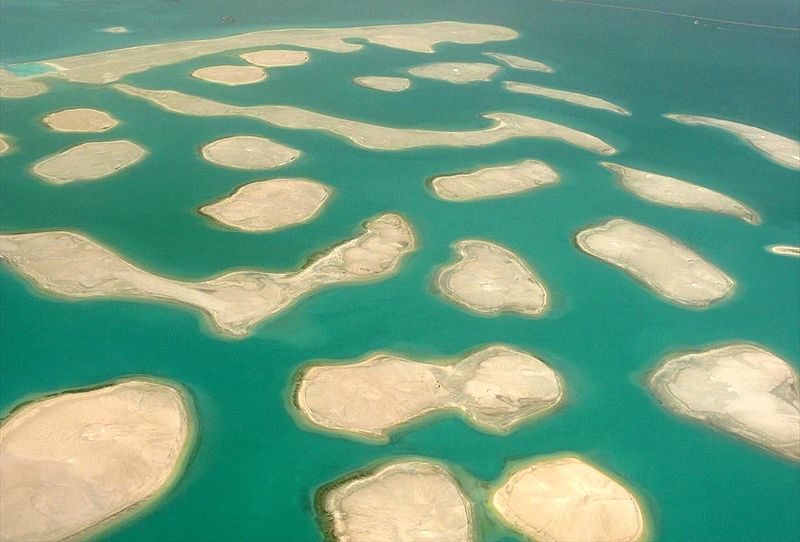
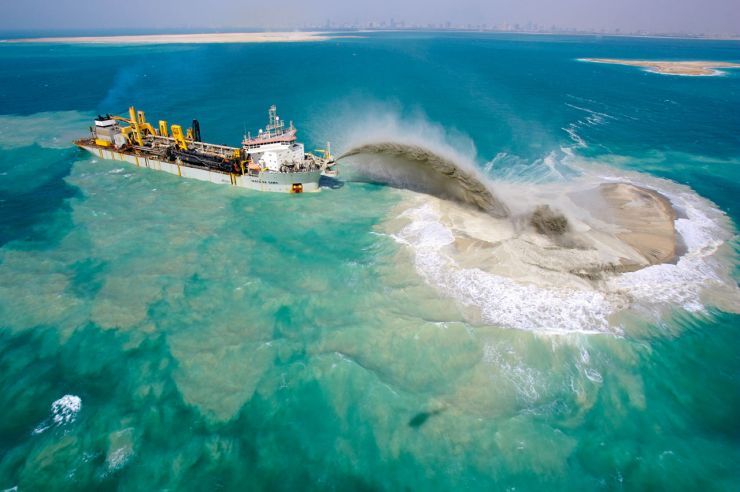
Dubai’s man-made islands, two palm tree shaped island chains and a third collection of blobs vaguely resembling the earth’s continents, seem like the excesses of a society trying to mold the natural environment into an unnatural one. The islands are to be sold to the wealthy seeking beachfront villas, yet only a few of them seem to have been fully developed. It seems that erosion is a process that the builders cannot fully tame, requiring continual dredging and relocation of the dirt and sand to shore up the islands’ foundations. Experts have said that in the case of an earthquake along a nearby fault line, the islands would liquefy like sand in a sifter and sink into the depths of the gulf.

Sometime later, we were cleared for our final descent toward another Persian Gulf nation. There was an indistinct haze marring the horizon, enveloping the line between sea and sky in a choking layer of suspended dust. Soon, the coastline vaguely appeared, muted by the dust, and as I looked down, I had a hard time pinpointing exactly where the water and the land met, even from a few thousand feet directly overhead. Beyond the beaches lay a dry, dusty, brown world, unadorned by a single tree or blade of grass. Just a vast sunburned terrain stretching for miles; how anybody ever chose to call such a place home is beyond me.

Yet as we flew on, signs of life arose from the desert: highways connecting scattered villages, pipelines and power transmission lines, a vast refinery in the distance. A line of hundreds of gravel trucks snaked their way off-road through the desert like ants seeking out a picnic feast. At the terminus of the motorized ant path, a pack of earth movers chewed into a massive sand dune, emptying its remains one bucketful at a time into the waiting trucks. Nearby, an island of greenery appeared in the sea of sand, a desert estate with actual grass and a garden of trees and shrubs, perhaps the home of some wealthy desert nomad who hit the big time selling sand.

As we flew farther into the desert, the American airbase emerged from the ocher haze, far from any other sign of civilization. After landing, we taxied among rows of air force and navy airplanes, a collection of aircraft larger than many nations’ entire aerial forces. We shut down the engines and exited the aircraft into a blast furnace; it was only ten in the morning, yet a 95 F temperature was magnified by a 17 knot steady breeze. Welcome to fall in the Persian Gulf.

A bus eventually arrived and took us to the host nation’s immigration and customs, where signs advised us to treat the officials with the utmost respect; it is quite common for an unwary glance, foul temper, or some other perceived insult to result in deportation from the nation. Knowing the purgatory awaiting us beyond them in the American base, it was tempting to cast a disparaging look in order to be expelled onto the next airplane leaving for Germany. However, we were soon approved for entry and we were on our way.

The base is a work in progress, as it has been for years. Rows of motley temporary buildings with window air conditioning units like a trailer park on steroids are home for most of the base’s inhabitants; they are temporary housing in name only, since they have been used since at least 2003. Overflow housing consists of a handful of quonset hut tents; our crew of five was given a small tent with four bunk beds, a refrigerator, and two dim lights hanging from the canvas ceiling. A canvas air conditioning duct ran along the spine of our dusty quarters, complete with Velcro tabs to adjust the amount of air desired. New permanent buildings are slowly being constructed nearby, but since we are considered transient personnel, we merely rated a forgotten tent at the edge of the base. The latrines were a short walk away, across a white gravel landscape, entirely devoid of any sign of organic life. Nothing grows here, not even weeds. During the day, the entire scene is blindingly bright, making me squint even behind my sunglasses.

The perimeter was marked by an earthen mound stretching from horizon to horizon. Guard towers, razor sharp barbwire fences, light stanchions, and electronic intrusion devices further ensured our safety. The chow hall was a 15 minute walk to the other side of the base. The central part of the base is affectionately called The Bra; a double white tarp, shaped like a brassiere, covers an open air pavilion around which the Base Exchange, laundry facility, movie theater, fitness center, coffee shop, and, most importantly, the bar are located. We are authorized three drinks a day and few people let their allotment go unused.

Military protocol and regulations cover every aspect of life here to a suffocating degree. Only the duty uniform and a PT uniform are authorized for wear – no personal clothing is allowed, even caps. The PT uniform consists of a gray polyester T-shirt with a subdued but reflective air force emblem, a pair of ill-fitting blue shorts known for riding up the leg inappropriately, white socks, and athletic shoes. In a cruel twist of irony, the uniform is manufactured with low-bid federal convict labor instead of a high-quality athletic apparel manufacturer like Nike or Under Armour. The shirt must be tucked into the shorts, even while exercising. At night, we must wear a reflective belt, and if a backpack is worn, it too must wear a reflective belt, even in areas where vehicles are not allowed.

Offenders of any aspect of uniform wear have been yelled at across crowded dining halls by self-appointed uniform police, usually colonels and master sergeants. God forbid that you don’t tuck your shirt into your shorts while running; some do-gooder will literally chase you down and admonish you for single-handedly causing defeat in the war. They have lost sight of the big picture here by focusing on the minute details; the spit and polish military is dying a slow death. Sometimes it is amazing that we still have the most powerful military in the world.

Burdened by cradle to grave regulations, airmen are beaten down to submission. Perhaps one out of ten people can be seen smiling at a given time, but I am probably being overly generous with that percentage. Most of the happier people are civilian contractors, who are immune from byzantine clothing restrictions and who are paid far more than the airmen who form the backbone of the base workforce. The 1,000 yard stare is the common emotion displayed among military personnel. People here count the days until they can leave; ask anyone and they will usually know down to the exact hour. This place can really suck the joy out of serving the nation.

Sleep is the best way to pass time in this white-collar prison. It is the ultimate time machine; you wake up and it is time to leave. I have slept more than 12 hours at a stretch in the past. When I do get out, I do so at night, when it is considerably cooler. Night time is the right time here; the base is more crowded after sundown than a shopping mall full of teenagers on a Friday night. If you venture out during daylight hours, the base resembles a ghost town. Searing heat is common well into the fall.

At least our time here is limited; as a transient aircrew, we will leave as soon as our number is called and we are given a jet to fly. Until then, here we’ll sit, biding our time until our parole is approved. Maybe I’ll get some more sleep.

Thursday, December 17, 2009

Afghan Two-Stop

It was a black night over the Black Sea as we approached our tanker. With two planned stops in Afghanistan, we would need at least 90,000 lbs. of fuel out of the 100,000 lbs. that we were scheduled to offload. With two qualified air refueling pilots in the seat, our plan was for me to take the first half of the gas and the other pilot would get the second half. So I crept slowly forward until we assumed the contact position, slightly less than 20 feet aft and below the KC-135 tanker. Since we were already heavy – with a full load of cargo and 80,000 lbs. of fuel already in our tanks – I had to be especially patient when moving the throttles. There is always a delay between power adjustments and a noticeable effect during heavyweight refueling. Add too much power too soon and you’ll quickly develop too much smash, leading to excessive closure – an obviously dangerous situation.

The boom operator flew the boom into our receptacle and we were taking gas. I made it to roughly the halfway point before I strayed too far left of centerline, and the boom operator disconnected. I had picked up slightly more than 40,000 lbs. I transferred the controls to the other pilot and he maneuvered back in for the rest of the fuel. As we approached the 90,000 mark, I noticed that we were approaching our minimum maneuvering airspeed, Vmma (pronounced V mama), the first margin approaching our stall speed. But before we could tell the tanker to accelerate, we stopped taking fuel. Our tanks were full after taking a total of 87,000 lbs. of fuel, short of the 90,000 we needed and well short of the planned 100,000 lbs. offload the mission planners determined we’d need.

After separating from the tanker, we picked up our flight plan to Afghanistan. I checked the fuel calculations in the computer, and sure enough, we wouldn’t have enough fuel to make it to our final destination. We’d have to get some at one of our stops in Afghanistan, perhaps 10,000 lbs. at most. Still, it was fuel that we’d be taking from an aircraft that needed it in country. Ten thousand pounds of fuel is a lot of gas for a fighter jet.

A few hours later, we arrived at our first stop, a Marine airbase. It was still dark and we were descending into a valley surrounded by mountains to an airfield none of us had ever been to before. Finding the runway was easy enough; missing a mountain was another thing. But with NVG goggles, terrain charts, and our GPWS and TAWS systems, we easily touched down and were soon offloading our cargo. As we finished up, I noticed two Marine Cobra helicopters takeoff – lights off- in a scramble. Marines on foot were taking fire somewhere in the valley and the two gunships wasted little time in responding.

We took off just before dawn with an empty jet, and proceeded to our next stop to pick up a load of cargo bound for the States. The sun rose above the low-lying clouds and the already white-topped peaks of Afghanistan, heralding the approach of the notorious Afghan winter. Above us, a brilliant deep blue sky stretched from horizon to horizon, nearly unblemished in its splendor. It was short-lived; we soon descended into another valley, one capped with clouds trapped by the peaks surrounding it. Before long, we were on the ground at another airbase, ready to upload our cargo, pick up a little gas, and be on our way.

We took off approaching the 18-hour mark in our day. As soon as we lifted off, we turned sharply, watching small walled courtyards and square fields from nearby villages pass under us like an ancient chessboard. Reaching our desired airspeed, I pulled the stick back, raising our nose above 20 degrees in a zoom for the overcast clouds above us. They can’t hit what they can’t see, so as soon as we reached the sanctuary of the clouds, I relaxed my tactical climb for the more sedate, and comfortable, climb typical of civilian airliners everywhere.

Another three hours of cruise and our day would be done.

Sunday, December 13, 2009

Autobahn Blues

Sometimes you just know it’s not going to be a restful crew rest. I knew it as soon as we pulled up to our hotel near an American airbase in Germany. It was tucked away in a corner of a nearby town, right next to a bustling autobahn, 50 feet away at best from the cars and trucks speeding by. The sound of the racing traffic was simply deafening, even inside my room conveniently facing the autobahn. It was the closest you’d find to a Motel 6 in Germany, simple Spartan rooms next to a busy highway. But this place included breakfast – frühstück in German – so that made it a Motel 7 – Motel Sieben in German.

Most of the crew immediately made their way to breakfast – it was about 9 am – but I wanted to get a run in before I ate. After changing, I found a road leading under the autobahn that quickly petered out into a gravel road next to a fallow field, left dormant for the coming winter. The grass on either side of the road was thick with dew and the air was achingly chilly, making each breath almost painful. At the end of the field, I turned onto what we call a horse trail in Texas, a hardpack lane with grass in the middle, which ran alongside a gurgling irrigation ditch. I soon came across the airbase and emerged onto a paved running path that led across the approach lighting for the runway, just outside of the fence line. A hawk was circling over the end of the runway, looking for prey. As a C-130 lifted into the air, heading toward me, the hawk dove for the ground, either to catch its morning meal or to avoid the quickly approaching aircraft. The C-130 roared overhead and climbed into the gunmetal gray sky; I watched it as I ran until it was but a speck in the heavens.

I made it back to breakfast after logging four miles. The breakfast was decent, but since it was included in the room rate, I certainly had nothing to complain about. After eating my fill, I went back to my room to shower and get ready to sleep the rest of the day away. It was nearly two in the morning, Pacific Time, but despite how tired I was, sleep would truly be a challenge. My room had an aluminum shutter that could be rolled down in front of the window, like a blast shield, and it made my room as dark as a crypt when it was closed. It did mute the sound of the autobahn somewhat also, but I still had to sleep with foam earplugs in. Heck, I could still hear the rumble of heavy trucks passing even through my earplugs. I could also hear an occasional takeoff from the nearby airbase, especially when a C-5 took off. I finally drifted off to sleep, but it wasn’t restful. I may have slept maybe six hours total.

Later that evening, we walked over to the main part of town for dinner at an Italian restaurant. It wasn’t far; we just had to cross under the tracks at the bahnhof. Monday nights are slow wherever in the world you are, but it was especially slow that night in our tiny burg; however, we made the best of it. After a few hours, we all wandered back to our rooms to surf a dozen or so television channels, only one of which – CNN – was in English. You’d think after staying in German hotels through the years, I would have mastered a little more of the German language than I have, yet Pidgin-German remains the extent of my limited vernacular.

We spent a total of three nights there, waiting for a mission downrange. I made further use of the running trails – my best escape from the monotonous routine - and made nightly strolls into town for dinner. Sleep was always a chore, especially when our mission reporting time necessitated a change in sleep patterns. Finally, early one afternoon, we were alerted for our flight downrange, slightly tired but ready to leave our motel behind. It’s never good to start a long flight already tired, especially when the flight involved two stops in Afghanistan before a final stop for another crew rest at an American airbase in the Persian Gulf – where our accommodations there would make us long for the days spent at the Motel Sieben.

Autobahn and all.

Sunday, December 6, 2009

Pearl Harbor Day


December 7, 1941; a date which will live in infamy. Yet today Pearl Harbor Day lies in the shadow of another date that lives in greater renown: September 11, 2001. Just as Katrina overshadows the deadlier hurricane that obliterated Galveston, Texas in September 1900, the events of 9-11 now eclipse one of the most iconic dates in American history. Not to take anything away from 9-11, but the lessons we didn’t learn from Pearl Harbor continue to haunt us to this very day. Americans seem to relish playing the role of Sisyphus, the Greek king condemned to eternity to pushing a boulder to the top of a mountain, only to watch it roll down the other side. With a sigh and a short memory, we trot down after the rolling stone to push it back to the summit.

In the months following the Japanese attack at Pearl Harbor, Congress and the American people asked how we could be taken by surprise. The commanding General and Admiral in the islands were both summarily relieved of command and the conspiracy theories that arose in the years after blamed even the President for letting the Japanese pull off a stunning surprise victory.

It was hardly a surprise.

As early as 1921, General Billy Mitchell predicted that the Japanese would launch an air attack upon Hawaii, an alarming prophecy that was lambasted by his peers and ignored by his superiors. Mitchell, an early aviation pioneer and staunch advocate of air power, is perhaps best known for his court marshal following his spat with the Navy. He boasted excessively how air power had made the centerpiece of the fleet – the battleship – obsolete. The Navy disagreed; how could the flimsy bombers of the day vanquish the unsinkable battleship? So Mitchell pulled a couple of captured German battleships from mothballs, anchored them off the Virginia coast, and with the naval brass watching from a safe distance, his squadron of bombers quickly proved his point. Ever defiant, the Navy claimed he cheated and when he did not back down from his rhetoric, he was sacked.

Moral: Americans do not like others to question their preconceived notions. And more often than not, our preconceived notions color our views of foreign affairs and warfare. We are always fighting the last war. Visionaries like Mitchell are seen as anachronistic barbarians, more easily dismissed than heeded. It is easier to change our behavior or concede our beliefs than to force adversaries to make concessions. In the midst of two asymmetric conflicts in Iraq and Afghanistan, our national leadership has declared that all future warfare will follow the current model. State versus state warfare is a thing of the past; low-level regional conflicts against non-state actors is the new vogue. They think it’s a new type of warfare, yet it actually extends to the beginning of recorded history.

To meet this new challenge, ex-Secretary Rumsfeld and current Defense Secretary Gates have slashed weapon systems left and right. Can’t use the F-22 to bomb terrorists, they say. The Comanche, the Crusader? Nope, don’t need them either. We’ve gotta make the army lighter and more organic. Hell, nuclear attack subs don’t fight terrorists either, yet we’re not scrapping them fortunately. But to look at the next 25 years, as the Defense Department’s QDR demands, the brain trust at the Pentagon doesn’t seem to think there’s a single nation out there that we might disagree with enough that might lead to warfare.

In a joint Indian-American exercise a few years back, the underdog Indian Air Force gave our F-15 drivers in the red, white, a blue jerseys a bloody nose. On the way out of the debrief, one of our boys, ever defiant even in defeat, seemed hopeful about the future, especially given the fact that the F-22 was slated for a large production run. We’ll get ‘em next time! The F-22 would ensure American aerial superiority over every nation on earth, unlike the aging F-15 so easily trumped in the mock war of the Ganges. By the time the rest of the world closed the technology gap with the F-22, perhaps 30 years in the future, we’d be off to the next generation fighter, thereby ensuring the home team would always enjoy a home field advantage. But with the recent cut in production for the F-22, we'll have to hang on to 35-year-old fighters barely better than anything our adversaries may soon have.

Then there’s North Korea, nipping at our heels like your aunt’s chihuahua, its eyes bulging out of its quivering skull like some kind of possessed rat. The North Koreans are just deranged enough that they might decide to end the cease fire and resume the war. Yes, the Korean War is still officially a war. There never was a peace treaty. No winner, no loser, just a draw. Who knows what may spark another confrontation? Another crop failure, China finally cutting off their allowance, a South Korean fishing boat straying across the watery DMZ – it could be anything. And North Korea is just dangerous enough militarily to cause some real pain for us and our allies.

The most obvious candidate is Iran. We’re trying hard to avoid warfare, but as they march farther down the road to the nuclear arms club, we’re going to have to do something. We’ve already used all our instruments of national power, except the military one, with little effect; what other tool in the toolkit will convince them to listen to us? Economic? We’ve had an embargo since the ’79 revolution and you can see how well that’s worked. Diplomatic? They won’t talk to us directly, so we have to use intermediaries like a kid passing a note in class. Informational? Let me know when that Voice of America broadcast starts to change the hearts and minds of the mullahs in Tehran. Intelligence? The CIA has been a dirty word in Iran since the Eisenhower days – think we’ll find willing recruits in Tehran today? At some point, we either have to accept the fact that they’ll get the bomb and hope nobody gets nuked, or we’ll have to actually do something militarily about it. Those are really our only two options and neither one looks promising. But if we have to go to war, we’d better have something more than a lighter, more agile army and a bunch of UAVs.

Back to Pearl Harbor. It perhaps is our biggest Achilles Heel. What worked for the Japanese will work for other nations, just as the Germans marched on Paris using the Schlieffen Plan time and time again. Who might have the most to gain from dusting off Yamamoto’s war plans and taking out the largest, most powerful bastion of military strength in the entire Pacific?

China. Don’t think Pearl Harbor couldn’t happen again? I hope not, but we have to be ready. And paring down our military to deal with non-state actors with visions of grandeur is playing into the hands of Beijing. Think about it; what is a bigger threat to the very existence of our nation and its liberties – Islamic terrorists seeking a new Islamic Caliphate or China? Sure Al Qaeda might take out an American city eventually – and that would be a disaster of epic magnitude – but our nation would not perish in its aftermath. But if the Chinese decided to go head to head with us, their missile technology is nearly good enough to wreak some serious havoc upon our nation.

What would be China’s motivation? Taiwan. They unswervingly claim that it is an integral part of China; they call it the One China Policy, which is the Chinese equivalent of America's Manifest Destiny. The United States is probably the only reason Taiwan is still free. If China decided to take the island by force, they’d have to neutralize an American response before it started. And they wouldn’t have to send a fleet of carriers halfway across the Pacific to do it like the Japanese did. Hawaii would face a rain of ballistic missiles, taking out every military facility in the islands, including our carriers. There would be other targets also: Alaska, Guam, Japan, and Okinawa. Every runway and port from which an American counterattack might originate would be rendered unusable. There might even be a space Pearl Harbor as well; take out a few military and commercial satellites and we lose communications, intelligence gathering, and precision navigation abilities. The Chinese would consolidate their hold on Taiwan before we could reconstitute our forces, effectively taking us out of the fight with a sucker punch in the first round.

We’d lose more than our Pacific military muscle; we’d lose the ability to project American power anywhere in the Pacific. Our diplomatic muscle would perish as well – why would the Chinese need to listen to us without a military threat? They already own most of our debt. We would have no recourse but to concede Taiwan along with our role as superpower. Some Americans may not think that our superpower status is vitally important, but that role guarantees the success of American commerce, and champions human rights the world over. Our entire way of life could change in the blink of an eye, forever changed simply because we have a preconceived notion that we do not want questioned.

We have to be ready for another Pearl Harbor as well as another 9-11. We cannot pretend that we only face one threat. America needs military forces able to deal with the kind of low-level asymmetric conflicts like we are currently facing, but to redefine the entire Department of Defense to face only one kind of conflict is to set us up for another Sunday morning surprise. Let’s quit fighting the last war. It’s time to be prepared to fight the next war, whether on the plains of a broken African nation, the deserts of Iran, or the Far East.

We, as a nation, have vowed to remember 9-11; nearly our entire military has been remade in a model to ensure that we will not let it happen again. But let us not forget Pearl Harbor. Let’s stop pushing the heavy stone up the mountain. Let us ensure that another Pearl Harbor can never happen again.

Friday, December 4, 2009

Intercept


We watched the horizon change from pitch-black to gray to a dozen shades of color from violet and blue to red and orange before the sun finally split the horizon with a fiery flash. I lowered my seat and moved my sun visor forward, trying to spare my retinas from the solar assault. It did little good. Until the sun rose higher into the sky, we were essentially flying blind.

I glanced at the mottled panorama passing by beneath us, sullen gray clouds tinged with red from the sun and muted fields of green visible through scattered cloud breaks. England. With the Atlantic behind us, there were less than two hours remaining before we’d touchdown in Germany. We were cleared to a point above East Anglia, then out over the Channel, where we said goodbye to London Military Control and switched to Dutch Mil.

“Good morning, Reach,” the controller answered. “Would you care to participate in a practice air interception?”

There is really only one answer to that question. With our affirmative reply, he cleared us for a descent and began vectoring a flight of two Dutch F-16s toward us. We picked them up on TCAS first, noting their excessive rate of closure. Soon we picked them one of them visually, rapidly approaching from our eight o’clock position. We never saw his wingman, yet our TCAS informed us that he was in our six o’clock position – the kill position. Had we been a hostile aircraft, we never would have made the Dutch coastline.

The F-16 off our wing settled into a wingtip formation with us, perhaps 50 feet off our winglet. We waved and took a few pictures before he waved back, turned up his afterburners, and surged ahead. It sounded like thunder, even over the sound of the airstream, our engines, and the electronic hum of our cockpit. We watched as the fighter broke left and dove downward toward the Channel, quickly lost to our eyes.

Thursday, December 3, 2009

...For Spacious Skies...

With a full load of cargo bound for the war, we lined up on the runway in Southern California for our flight to Germany. We would meet a tanker off the coast of New England some six hours later, so it was important to take off on schedule. At the designated time, the co-pilot pushed up the throttles and we accelerated quickly and majestically rose into the air. We hadn’t even climbed more than a couple of hundred feet before the greenery seemingly so predominant at eye level was quickly replaced by the desert that Southern California really is. Here and there I could still see blossoming isles of green amidst the desert – a golf course here, a park there – but as we continued our standard instrument departure, even those oases of incongruous emerald were lost to my sight.

Following the magenta-colored line on our flight displays depicting our departure routing, we made a broad turn to the south. The Channel Islands were visible just offshore, and hundreds of boats of all shapes and sizes were plying the waters of the shimmering Pacific. We continued southward until we were no longer a traffic conflict for other airborne arrivals and departures for the half-dozen or so airports scattered beneath us. So Cal Departure Control finally gave us a turn to the east, and we soon climbed out over Palm Springs and the Salton Sea. It was clear ahead of us for probably a hundred miles, and I could already see the Colorado River snaking its way through the otherwise barren desert. It was a good day to be flying.

We crossed central Arizona south of Flagstaff; the Grand Canyon was just a little too far north for a bird’s eye view, but was still a spectacle, as always. Continuing eastward across the parched landscape, we passed Albuquerque and the Rio Grande Valley before losing sight of the earth completely due to a frontal line over the Texas Panhandle. Oklahoma, Kansas, and Missouri all passed beneath us sight unseen obscured by the undercast. Somewhere over the Midwest, we ran out of daylight; the shadow of the earth arced into space above us as we flew into the darkness beyond. The amber lights of cities appeared across Indiana and Ohio sparkling brilliantly 35,000 feet below us. I could almost make out Lake Erie to the north by the cities clustered along its darkened shoreline.

The tanker crew began calling us; they were eager to arrange an early rendezvous. Instead of meeting at the tanker track off the tip of Long Island as scheduled, they would fly westbound to meet us over western New York State. They figured that the earlier they gave us the required fuel, they’d head home early for the night. It made little difference to us; we still had a seven-hour flight across the pond. So we agreed to help them out, as long as they could give us a little extra fuel. I didn’t need the refueling, but another pilot did, so I hopped out of the seat so he could get the gas.

Air Traffic Control helped us coordinate a new rendezvous point and we descended to 20,000 feet. We started looking for the tanker, a KC-10, and it wasn’t long before we saw it at our three o’clock position, 1,000 feet above us. We continued on a converging heading as the tanker grew larger, its lights and rotating beacons somewhat reminiscent of the mother ship from Close Encounters. The KC-10 is a large, make that gargantuan, tanker; receiver pilots refueling with the KC-10 for the first time often underestimate how close they are. They might call 100 feet in trail while they are actually 200 feet or farther away.

The pilot crept in slowly and steadily and we were soon taking fuel. I noticed the lights of New York City growing brighter as we approached; our next turnpoint on the flight plan was JFK airport, so we’d fly just south of the city. I was sitting just behind the pilot, so I’d have a bird’s eye view from the left window, directly into the heart of the Big Apple. I was not disappointed; the elegant iridescent lights of the Verrazano-Narrows Bridge crossing the Hudson, the stark outline of darkened Central Park, the twin transcendent spires of the Empire State and Chrysler Buildings bathed in illuminated splendor, the abounding radiance of Times Square, and a playoff game in progress at Yankee Stadium. I could practically see the pulse of the city through its lights.

The tanker dragged us along Long Island out to Hampton VORTAC, a navigation station at East Hampton; we had already received enough fuel to finish our flight to Germany, but they kindly allowed several of us to get some practice time on the boom. Reaching Hampton, we turned north along the New England coastline while our tanker turned south for its base. As the city of Boston glittered west of us, Boston Center cleared us direct to our coast-out point off the coast of Nova Scotia. They soon handed us off to Moncton Center and we left the States behind. Our passage of American skies was complete as we were soon cleared to our 50 West crossing point, somewhere above the dark restless Atlantic.

Tuesday, December 1, 2009

Back on the Line

Two weeks at home went by quite fast and I soon found myself at the top of the scheduler’s list of available pilots. I was still a little fatigued from my last trip, but I knew the odds against two bad trips in a row were low. So on a cool, misty Sunday morning I loaded my gear into my truck and headed toward base for yet another flight. Autumn was in full swing, bringing its usual wet and dreary days to the Pacific Northwest, so despite the fact I’d be away from my family for at least the next 11 days, I would not miss the steadily shortening days of fall.

After loading our gear into the aircraft, we started our pre-flight checks, assuring us that everything would work as advertised. Our auxiliary power unit, hydraulic pumps, airflow manifolds, and electronic alarms combined in a cacophony of sounds that assaulted our ears, even through my foam earplugs. Before long, we were ready. After starting our engines and finishing our last checklists, we taxied toward the runway through the steadily increasing rainfall.

It didn’t take long to leave the dreary landscape behind. We climbed from the dismal morass into a sky of boundless blue, leaving the layer of clouds beneath us like a sea of gray. Mt. Rainier rose from the clouds like a majestic island, its crown already dusted in white from its first snowfall of the season. As we rose higher, Mt. Adams and Mt. St. Helens were visible as well, likewise endowed in a splendor of white. As we headed south, the other grand peaks of the Cascades shared similar fates, as far south as California’s Mt. Shasta.

We soon descended over the San Bernardino Mountains of Southern California and easily spotted our destination. My co-pilot reported that we had the airfield in sight to SoCal Approach Control as I maneuvered for a right base. We configured for landing and I flew a visual final for the runway. After touchdown, I eased the thrust reversers out and gently applied the brakes. After taxiing clear, we preceded to the ramp and shut down.

It was a glorious day in Southern California: 79 degrees and sunny, the antithesis of cool and rainy Washington. I passed on the crew bus ride to base operations and enjoyed the warmth of the sun on my face as I walked across the ramp. We had a long flight ahead of us, an aerial refueling flight all the way to Germany. So I’d soak up all the sunshine I could, especially since the same weather we left behind in the Pacific Northwest likely awaited us in Northern Europe.

Sunday, November 29, 2009

Rest for the Weary

Upon our arrival in Germany with our wounded troops from Iraq, it was disconcerting to discover that our trip from hell continued. We seemingly could not catch a break. We were tired, past our scheduled return time (SRT) to get home, and some of the crew were openly hostile toward each other. It was time to go home.

Unfortunately, there were no missions leaving Germany for our home base in the Pacific Northwest. But there were several jets available to return to their East Coast bases just waiting for a crew. Since we were past our SRT, we were set up to take the first flight out, even if it was a mission that terminated on the East Coast.

So when we landed in sunny South Carolina the next day, we were on our own. The Air Force really didn’t care about us anymore. We didn’t even count against their record for SRT busts anymore – a list seen by a general officer every day. Without a tail number to link my crew with, it was like we didn’t exist. It would be up to us to figure out how to make it the rest of the way home.

We checked into a hotel and made commercial travel arrangements to get home. Despite all the equipment and bags we had, we wanted to get home and there were no military flights available. So after a short night’s rest, we headed to the airport with a mountain of bags. We had to accept the fact that our entire day would be spent in TSA screening lines, airport terminals, cramped commuter flights, and several transfers.

We made it out of the local airport just fine, but we hit a snag in Atlanta as we waited for our next flight. It seemed that even the national airlines have some of the same maintenance problems we have in the military; our jet was broken. So we retired to a bar in the terminal and waited while they replaced a hydraulic pump on one of the engines. We fully anticipated having our flight cancelled outright, and trying to find a decent hotel near the airport for yet another night away from home.

However, the light at the end of the tunnel grew brighter; our flight was fixed and they began boarding. The end of the trip from hell was nearly at hand. Fortunately all of our trips weren’t this painful. After a few weeks at home, I’d be ready to go out again to do my part. In the meantime, I eased the seat back and rested my weary head as the airliner took off into the darkened skies above Atlanta and headed west - toward home.

Sometimes it's nice to let somebody else do the flying for a change.

Tuesday, November 17, 2009

The Hot Seat

The flight to Iraq proceeded normally, even our tactical approach and landing at a large American airbase there. A fleet of ambulances began to arrive as we shut down, but aeromedical evacuation missions take considerable time to load patients and takeoff, so we knew we’d never make our scheduled takeoff time several hours away. It was quite hot outside, and as our engines wound down and our APU, or auxiliary power unit, took over the air load for our air conditioning system, we knew we were in for a sweltering ground time. The APU’s insufficient air flow did nothing to hold off the steadily mounting air temperatures outside, and it was not even past ten in the morning yet.

By the time half of the patients were onboard, it was nearly 100 degrees in the cargo compartment. Upstairs in the cockpit, it was even worse; with all of the electronic flight displays and other avionics equipment, it was topping 117 degrees. We asked maintenance for an air cart to pump cooler air into the aircraft, but they had to borrow one from a fighter squadron down the ramp. But we eventually had two air carts pumping air into the aircraft through our crew entry door.

It was like trying to use an air conditioner at a backyard cookout in Houston – in August. It felt great if I was standing right in front of the duct, but if I moved a foot to the side, I was back in the furnace. Patients were still slowly arriving, and one of the recent arrivals, a civilian contractor with chronic emphysema, was having complications. They were trying to stabilize him for flight, but things were not looking good. He desperately needed better care than he could receive in Iraq, but if his condition didn’t improve enough, we’d have to leave him behind.

Since we had only planned for a short flight from Turkey to Germany, we did not bring enough food for a longer day. The crew was getting hungry, so we sent somebody to load up on food from the chow hall. Soon we had a feast of imitation scrambled eggs, greasy sausage, French toast sticks, and fruit to hold us over. The temperature was holding steady, but maintenance was unable to fix the problem. We’d have to take off in a flying furnace.

They finally stabilized the patient and the medical crew was soon ready to depart. We started up and taxied out, eager to takeoff for Germany. We lined up and pushed the throttles up and began our takeoff roll. Passing 60 knots, one of our engines red-lined with an over-temperature. Reluctantly, I pulled the throttles back to idle and we taxied back to maintenance. If there was much damage to the engine, we’d be stuck, waiting for a new engine to arrive from out-of-country. It’d be days before we made it out, if we were lucky enough to have another engine nearby.

While the maintenance crews inspected the engine, we called for a third air cart, in addition to the others already being rolled back into place. Soon we had a duct snaking up the flight deck, and we enjoyed much colder air in the cockpit. For the first time in over 16 hours, it was almost perfect conditions to take a nap.

But it was not to be. Maintenance found no damage in the engine, so we readied ourselves for another takeoff attempt. We pulled out the duct work, started our engines, and taxied back out. But we had a better plan for the second attempt. We turned off all the bleed air from the engines (which provide air for the air conditioning and pressurization systems) and took our time advancing the throttles to max power. We were able to takeoff before the engine over-temped, but since we were airborne, we elected to pull the power back slightly and continue onto Germany with our mission.

It was still unbearably hot in the aircraft and it would take two hours into the flight for the temperatures to drop to a comfortable level. We’d have to write the air conditioning system up, as well as the engine, which would eventually need to be changed. But despite our problems, at least we were able to deliver our patients to the medical center in Germany.

And we wouldn’t have to spend the night in Iraq.

Saturday, November 14, 2009

The Microsoft Jet


I was a little surprised when we were alerted shortly before midnight, exactly as planned, after limping a broken aircraft into Turkey with significant electrical problems. These things usually take a little longer to fix than planned, since maintenance problems sometimes require parts that aren’t readily available or the labor takes longer than expected. Perhaps the electrician had found the electrical short right away, they had the part in inventory, and they had no problems installing it. At any rate, it looked like we’d be back in Germany by morning.

Upon arrival at the command post, we learned that our mission had changed; we were now scheduled for another aeromedical evacuation flight, this time to Iraq. It made sense: our aircraft was already configured for the mission, we had a full aeromedical crew with us, and we were only a couple of hours from Iraq. We picked up our gear, out-processed through Customs, and headed out to the jet.

After arriving at the aircraft, we checked in with maintenance to see what they did while we were in crew rest. To our surprise, an electrician had never even looked at the jet. The maintainers we debriefed after we landed didn’t even pass along any of our concerns to the crew that was preparing to launch us. In between, maintenance simply rebooted the aircraft, just like a troublesome computer. The C-17 truly is the Microsoft Jet.

We had some concerns, but maintenance insisted that the problem could not be duplicated. We still suspected a short in either the comfort pallet or its controlling electrical bus, but maintenance felt we were good to go. However, during the loadmaster’s pre-flight, he was required to turn the power on for the comfort pallet…and we were amazingly plunged back into darkness. So much for the Microsoft fix.

They finally called an electrician out to the aircraft. He felt that the problem lay with the comfort pallet, not the bus, even though he did not actually look at anything. After debating back and forth among the crew about the worst case scenario – an electrical fire in flight - we felt we could proceed with the mission with the comfort pallet disconnected from the bus. If the bus was later found to be the culprit and an electrical fire began, at least we would know which bus to depower to put the fire out.

However, before we could wrap things up and takeoff, maintenance discovered yet another problem: our weather radar wasn’t working. But they did have the part in stock. So they literally popped the hood - the aircraft’s nose cone - and began repairing the radar. Since we had already out-processed through Turkish Customs, we were stuck at the jet in the interim – until we were either fixed or our duty day ended. In the event of a maintenance problem before takeoff, we are limited to four hours after our scheduled takeoff time, with an optional extension to six hours with the concurrence of the crew. Since there were wounded troops in Iraq waiting for us to arrive, we elected to wait as long as we could so we could transport them to Germany for treatment.

The sky had turned a pale shade of gray by the time we were fixed five hours after our original takeoff time. Sleep had been impossible with the number of crewmembers onboard, maintenance activity and a pitifully weak air conditioning system in the cockpit. We were tired and were only planning on a relatively short flight back to Germany, so we didn’t even have much food with us. And we couldn’t get back through Customs to get anything.

But we were finally fixed and there were a dozen or so wounded troops waiting for us in Iraq. It was finally time to go to work. It was time to fly.

Thursday, November 12, 2009

Lights Out

After landing in Germany following our trans-Atlantic flight from Maine, we were given the bare minimum time off – 16 hours to our next takeoff – for a mission heading downrange to the Sandbox. It was an aeromedical evacuation flight to Afghanistan, a scheduled run to pick up troops returning to Germany for treatment they could not receive downrange. I have always liked flying medical flights; it is much more rewarding for me to transport our wounded warriors than moving boxes and crates containing who knows what.

The only drawback to these flights is managing the chaos; trying to get all the people and agencies responsible for an on-time takeoff is somewhat like herding cats. The medical crews arrived with their equipment and supplies, the aerial port had installed a comfort pallet onboard – containing two additional lavatories and a large galley with additional refrigerators and ovens, maintenance was working a last minute problem, and not enough fuel had been loaded. Yet it all came together and we managed to take off late, but before the airfield closed for the night.

I was in the seat for the flight for several hours as we crossed Eastern Europe and coasted out over the Black Sea. After reviewing our routing into Afghanistan, I climbed out of the seat to heat up my dinner. Just as I put my food in the comfort pallet oven, most of the lights inside the aircraft went out, plunging us into near darkness.

I practically vaulted up the stairs to the flight deck as alarms were alerting us to a major electrical failure. We pulled out our technical guidance and determined that we had lost two electrical buses controlling all of our exterior lighting and much of the inside lighting. In addition, we lost part of our flight controls (we have redundant systems, so it was a negligible loss). It was also impossible to fix during flight. It didn't seem wise to continue to Afghanistan with an aircraft with electrical problems. If we couldn’t fix it on the ground there, we’d be stuck. So we elected to divert to Turkey.

We coordinated for a 180-degree turn over the Caspian Sea and pulled out our charts to figure out the best routing to the American airbase in Turkey. Since the war in Iraq in 2003, the Turks have only allowed a certain number of cargo aircraft supporting the war to transit that base on a regular basis. We knew they’d have issues with us diverting there, so when Ankara air traffic control started asking why we were diverting, we declared an emergency. They immediately gave us the green light and direct routing to the airbase, which we happily took. Had we neglected to declare an emergency, it was likely that we would have been denied entry.

I could see the airbase fire trucks waiting for us while we were still 10 miles out on final approach. As we crossed the runway threshold, they started rolling and met us as we taxied clear of the runway. After determining that we were in no danger, they terminated the emergency and we taxied to parking, where we gave the jet to maintenance. We had previously chased down wiring schematics in our technical data, leading us to believe that either the comfort pallet installed in our cargo hold was to blame or there was a short in the electrical bus that controlled power to the comfort pallet.

At any rate, our day was done. It would take electricians too much time to determine where the electrical short was, so we headed off to crew rest. By the time we checked in our equipment, cleared the notoriously slow Turkish Customs, and found billeting rooms for the medical crew and my flight crew, the sun was already up. We were set up to takeoff in 16 hours – the bare minimum – if we were fixed. Another aircraft had been tasked to pick up our mission, so we’d return to Germany and wait for another mission downrange. Some of the crew was eager to hit the local off-base market to shop, but it had already been a long and tiring day. I was quickly off to sleep, despite the daylight streaming through my broken window blinds, dreaming of Turkish delights.

Tuesday, November 10, 2009

The Plot Thickens

Day two of the trip from hell started out normally, with a planned flight from Andrews AFB to a nearby Army base for a cargo upload and an aerial refueling en route to Germany. However, the plan quickly changed; our tanker cancelled, leaving us with a fuel stop in eastern Canada. Since weather was a factor at our usual Canadian airfields, we would stop in Halifax, the largest city in Canada's Atlantic provinces. It would be a long day, but nothing out of the ordinary.

Our takeoff from the DC area went smoothly, but we soon ran into thunderstorms as we headed south. A line of storms faltered just offshore in Virginia and across the Carolinas, threatening our approach and landing at our destination. However, we easily made it in without any of the previous night’s headaches and proceeded to upload our cargo.

It was night by the time we took off and flew northward along the eastern seaboard sleeping beneath us. Much of the East Coast was socked in by a layer of thick clouds, but the glow of the major cities illuminated the clouds from below. After we leveled off, we checked the weather for Halifax, the only destination in Canada’s eastern provinces that was forecast to be VFR.

However, once we began our descent, the weather began to change for the worse. It was still clear – with nearly unrestricted visibility – but a ground fog quickly formed that reduced visibility at the airport to Category III ILS conditions – zero ceiling and zero visibility - flown with an autoland capability. The C-17 is capable of flying an ILS to Cat II conditions – down to approximately 100’ ceiling and 400 meters visibility – but does not have the ability to autoland as required by a Cat III approach. We were out of luck.

We established a holding pattern several thousand feet over the airport while we checked on viable alternates. As we circled, we could see the sparkling city lights of Halifax and the resplendent suspension bridge spanning the glittering nighttime harbor. We could even see the runway lights burning brightly through the ground fog. It was so close, yet so far away. Even if we had tried to fly the approach to land, we’d see the runway until maybe a hundred feet above it, but then we’d be flying blind precariously close to terra firma.

Our planned alternate was another Canadian airport far to the north, but we found a closer airport back the way we’d already flown – Bangor, Maine – a short 45 minutes away. So we climbed up to altitude and flew back to the US. A short approach and landing later, we were on the ground and watched the sky turn pink as we refueled the aircraft. Our already long duty day had just turned a little bit longer.

It still wasn’t the trip from hell, but it was already a more challenging mission than most, given two days of weather woes. As we set out again over the Atlantic Ocean, our spirits were still high, but we could not imagine the immense challenges that awaited us over the next ten days.

Wednesday, November 4, 2009

The Trip From Hell

I had to pay dearly for my ‘vacation’ in paradise; for every good deal you get in this business, a bad deal is not far behind. But my next trip started innocuously enough – it even looked like another good deal. It was a Stage mission to the Middle East – surprise! – but it began with a flight south of the border, a trip to Guadalajara, Mexico to pick up President Obama’s Secret Service contingent and their vehicles. It came on the heels of his summit with Prime Minister Harper of Canada and President Calderon of Mexico and would end with an overnight stay for us at Andrews AFB, outside of Washington DC, where I have a brother living nearby.

We arrived in Guadalajara easily enough, where the airport ramp was sporting more firepower than a gun show in Texas. The President had already departed on Air Force One, but we had to wait for the Secret Service and their vehicles to arrive. After loading the vehicles, we were soon airborne. We dodged a few thunderstorm cells over northern Mexico and soon crossed into Texas. It was smooth sailing all the way to the East Coast, except for a line of storms directly over Washington DC. One storm cell was nearly on top of our airfield. We considered diverting to our alternate, but the same line of storms threatening DC would hit our alternate airfield before we could arrive there as well.

We called the control tower at Andrews for the latest weather observation. The storm had not yet hit, but it was blocking our path to the runway. However, there was only a light tailwind from the opposite direction, well within our limits for a tailwind landing (normally we land into the wind). So we cautiously probed around the monster thunderstorm and came in from the south. The aircraft isn’t quite as stable while making an approach and landing with a tailwind, but we made it in with no problems before the rain began. We taxied clear and planned for an evening in DC.

The trip didn’t have the markings of the trip from hell yet, but the writing was on the wall. Weather would be a significant factor during each of our subsequent legs, and other challenges would make this mission one for the books, and not it a good way.

As it turned out, our first day would be our best day during the entire trip.